DC-link vs snubber capacitors is not a distinction I'd leave to a line in a quotation. The first supports the DC bus; the second serves a switching-transient control role. Below are seven invented quotation statements, with editorial notes on what each would and wouldn't establish. They are examples for reviewing a proposal, not quotations from SMILER or accounts of customer projects.
"Suitable for inverter use"
This gets a pencil mark from me: application too broad. An inverter can contain both DC-link and snubber capacitors. Knowing the equipment type does not identify the component's job. A buyer could send the same sentence to several suppliers and receive proposals addressing different circuit positions.
The missing information is the role. A bus-support enquiry belongs with the DC-link capacitor range. An enquiry concerning a defined switching-transient circuit belongs with the snubber range. Neither category name approves a particular configuration, but choosing the relevant one removes an avoidable ambiguity.
I would keep the original application description and add the schematic reference beside it. That way, 'inverter use' remains useful context without being made to carry the whole specification. If engineering hasn't settled the circuit role yet, the quotation is preliminary. There's nothing wrong with that, provided everyone reading it understands the same thing.
"The existing DC-link capacitor should be sufficient"
Sufficient for which requirement? This statement needs a technical basis before it can rule out another component.
TDK's power-module article explains that parasitic inductance between bulk DC-link capacitance and switching devices contributes to voltage overshoot during fast switching. Local, low-inductance capacitance can help control that event. The ceramic module examples in that article are not evidence of SMILER film-capacitor suitability for installation inside a module.
My note beside the quotation would be 'show the connection and the operating case.' A schematic reference locates the electrical position; an assembly sketch shows how the connection is intended to be made. Those attachments are much more useful than an argument over whether the existing capacitor looks large enough.
The opposite claim, 'an extra snubber will fix it,' needs scrutiny too. TDK describes unwanted resonances involving local capacitance and parasitic inductance. The proposed change must be judged in its circuit. Adding a part isn't a result.
"Same voltage and capacitance as the original"
Useful, but unfinished. Those entries belong on the comparison sheet. They don't erase the rest of it.
For the DC-link position, the comparison needs the bus operating conditions and relevant current loading. For the snubber position, it needs the switching waveform and repetitive pulse conditions at that location. An isolated current figure with no indication of peak or RMS is not enough to make either comparison dependable.
Temperature is another unfinished line. TDK's film-capacitor primer explains that ripple and high-frequency currents cause self-heating. It also distinguishes AC from DC voltage ratings. A voltage label cannot settle the thermal review or describe every permitted waveform.
I would mark this proposal 'nominal values match; application review open.' That's more accurate than either 'equivalent' or 'rejected.' The first overstates the evidence, while the second throws away an option before its documentation has been examined. The supplier needs the actual duty and a chance to respond to it.
The difference is not academic. A component selected to address bus behaviour is being judged against that bus requirement. A proposed snubber is being judged against a switching-transient requirement. A match in nominal values does not demonstrate either result, much less both. The honest comparison keeps the job attached to the candidate instead of reducing the candidate to two catalogue fields. That gives engineering a reasoned basis for accepting or declining it.

"Fits the available space"
A worthwhile answer to the fit question. It becomes misleading only if it is used to answer the connection question as well.
The body outline may fit while the terminal arrangement requires a different connection. In that case, the proposed installation has changed. I'd want the revised drawing attached to the review, not an informal promise that the assembly team will make it work. Approval of a body dimension cannot stand in for approval of the electrical arrangement.
This is also why catalogue photographs are limited evidence. A photograph can help identify the family or orient a discussion. It doesn't define the ordering configuration or the installation drawing. The mechanical and electrical reviewers should be able to point to the same proposed assembly, even if they are responsible for different questions about it.
"We can offer a standard SMILER family"
Fine as a starting point. Which family, and which configuration is being proposed?
MKP-L and MKP-LM are documented DC-link families. MKP-L uses metallized polypropylene film with an aluminum or metal shell; MKP-LM uses metallized polypropylene film with a plastic shell. Those are construction descriptions. I wouldn't use them to rank current capability.
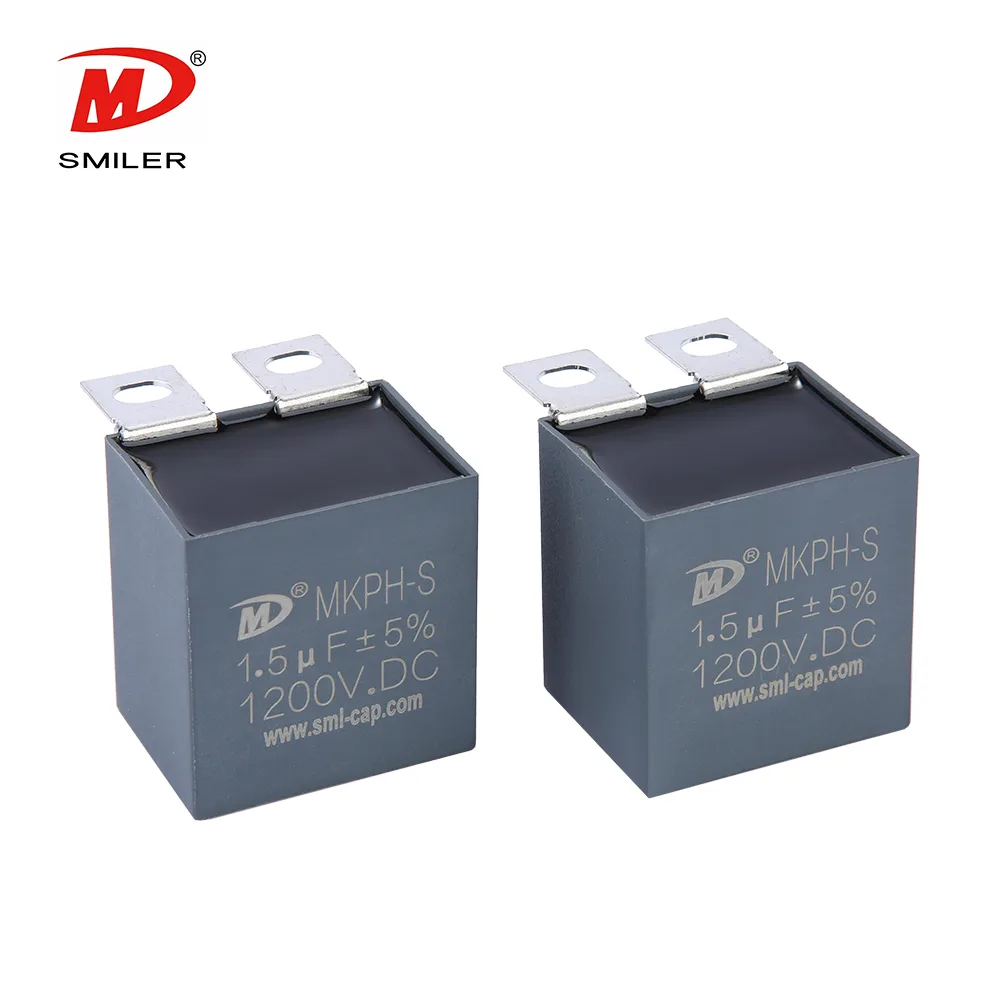
MKPH-S is a documented snubber family using metallized polypropylene film and a plastic shell. Its listed applications include IGBT snubbering and switch-mode power supplies. MKPH-LS also belongs to the snubber range, with plastic-shell or tape-housing construction described in its documentation.
Those facts direct the next enquiry. They do not supply a pulse-current limit, lifetime or equipment approval for an unspecified variant. A useful supplier response identifies the candidate and provides the information needed to compare it with the duty. Until then, a family suggestion remains a suggestion.
"Sample approved"
This is the note I'd be most reluctant to pass forward without its attachment. Approved for what? A sample that fits has answered a mechanical question. It hasn't necessarily answered the switching question that started the enquiry.
The acceptance record should identify the requirement evaluated, the operating conditions and the proposed configuration. Engineering decides the measurement method and acceptance criteria; this article is not a high-voltage test procedure. Purchasing needs the resulting decision, not a detached phrase whose meaning depends on who remembers the evaluation.
A later change makes the reference especially useful. If the quotation now proposes different terminals, is it still the configuration that was reviewed? If not, someone has a new decision to make. Carrying forward an old approval without noticing the change would leave a gap between the evaluated assembly and the part being ordered.
"Please confirm the order"
At this point I'd read the enquiry and the reply together. A quotation can be perfectly clear about price while still leaving the application unresolved. The order should reflect the configuration actually agreed, with any outstanding technical decision visible.
Where both DC-link and snubber parts are required, separate enquiry lines help. Each gets its own circuit position, operating information and drawing reference. Shared commercial details can stay together; the capacitor RFQ checklist covers quantities and supporting documents.
The next request to SMILER might still be for a family suggestion or a configuration proposal rather than an order. Say which one you need. A preliminary enquiry doesn't have to look finished to be useful. It has to give the supplier a clear question and give the buyer a clear way to judge the answer.
Frequently asked questions
Can I replace a snubber capacitor with a DC-link part?
Not from the label alone. The proposed configuration needs review against the waveform, current duty, temperature conditions and connection in that circuit. A matching capacitance and voltage are only part of the comparison.
Does every inverter need a separate snubber?
No universal rule is given here. The topology, layout and switching behaviour determine the problem to solve. Establish the requirement before deciding whether a separate component is needed.
Which SMILER families are relevant to an initial enquiry?
MKP-L and MKP-LM are documented DC-link families. MKPH-S and MKPH-LS are documented snubber families. Send the intended circuit role and operating brief alongside the family name so a proposed configuration can be reviewed.
Sources & technical reading
External technical references explain general principles, not SMILER ratings or approvals.