Start with the equipment requirement
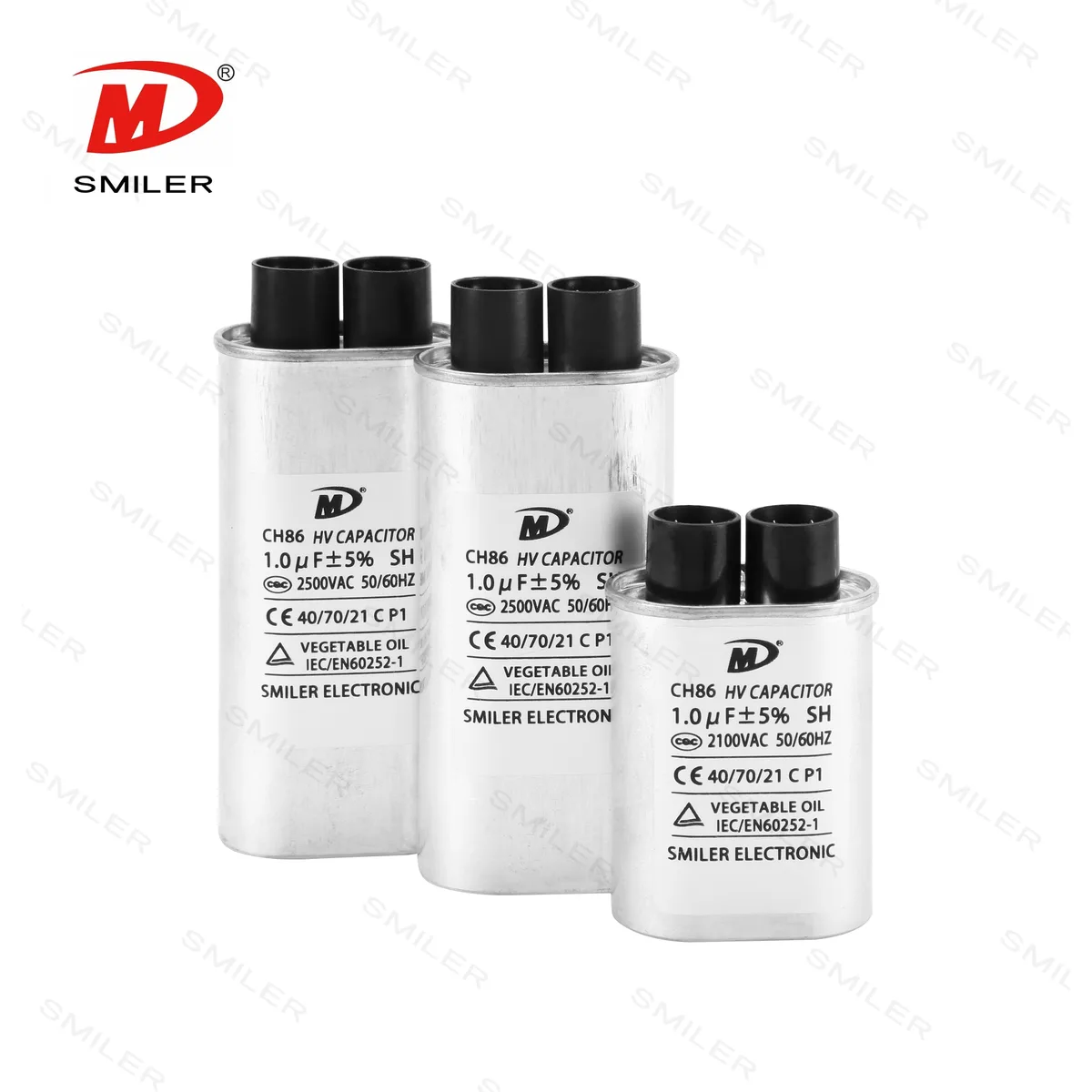
For a CH86 enquiry, provide the required capacitance, voltage, tolerance and intended circuit position. Attach the equipment specification or existing component data if you have it. If you are replacing a part, photographs of its marking and connection arrangement can accompany the drawing.
Specify the appliance component, not just the appliance name
For a microwave-oven purchasing project, use the appliance bill of materials or approved service-part reference as the starting point. Ask the responsible technical team for the required capacitance, voltage designation, tolerance and mounting drawing. Preserve the units exactly, including whether a voltage entry is AC or DC. Do not fill a missing specification with a value taken from another microwave model.
The CH86 catalogue establishes the product name, microwave application context and availability of customization discussions. It does not establish a universal electrical replacement for microwave ovens. A useful enquiry therefore connects the appliance requirement to one proposed CH86 configuration, instead of treating the shared appliance category as proof of compatibility.
Keep the electrical specification and physical drawing distinct
Use two comparison views when assessing a proposal. The electrical view should show each value required by the appliance specification beside the corresponding proposed value. The mechanical view should show the body envelope, mounting features and connection layout. Mark a blank entry as an open question; do not interpret it as confirmation that the feature is absent or unnecessary.
For example, if your equipment drawing names a connection spacing but a quotation gives only body dimensions, ask for the missing connection detail. If the quoted capacitance matches but the voltage description uses different notation, ask the technical reviewer to resolve that notation before approving the part. These are document-review examples, not published CH86 dimensions or ratings.
Use qualified service handling for evaluation
Capacitors in microwave ovens can retain a high-voltage charge after the appliance is unplugged. GE Appliances’ service guidance cites that stored charge, circuit complexity and diagnostic-equipment needs when advising against do-it-yourself microwave repairs. This is general appliance guidance, not a CH86 test result. Arrange evaluation through the qualified personnel responsible for the appliance.
For sourcing, you can still prepare the part reference, existing documentation and purchasing quantities without attempting electrical diagnosis. Ask the service or engineering team to supply any measurements that the component review requires. Keep the returned measurement context with the enquiry so a proposed replacement is assessed against an identified requirement. This page is a purchasing reference and does not provide discharge, wiring or repair procedures.
If the original drawing and the marking disagree, send both and highlight the difference for the appliance engineer. Keep the unresolved item visible in the enquiry. A purchasing description should not silently choose one value, since the proposed component must be reviewed against an agreed requirement.
Discuss the configuration
Production according to customer requirements can be discussed. Identify the dimensions and connections that must remain fixed, then describe any acceptable alternatives. Request a complete electrical specification and outline drawing for the proposed configuration before approving samples.
Include any required certification document and destination market in the request. Approval scope, operating limits and commercial terms need to be confirmed for that proposal.
Request a quotation
Use the capacitor RFQ checklist to prepare the information, or contact SMILER with your CH86 requirement. Separate sample quantities from production demand and include your requested delivery destination.
Have a drawing or target specification?
Include it in your first message so the conversation starts with your equipment requirements.
Start a technical inquiryFrequently asked questions
Can CH86 be customized?
SMILER invites enquiries for production according to customer requirements. Send a specification so the proposed configuration can be discussed.
Are standard ratings listed here?
No fixed voltage, capacitance or dimensional range is provided on this reference page. Request the values and drawing for the part offered.
What is needed for a replacement enquiry?
Send the original specification, readable markings, connection details and mounting dimensions. Ask for a proposed specification rather than ordering by the family name alone.
Sources & technical reading
Product information is based on the SMILER catalogue. Confirm the specification for the selected configuration. External technical references explain general principles, not SMILER ratings or approvals.