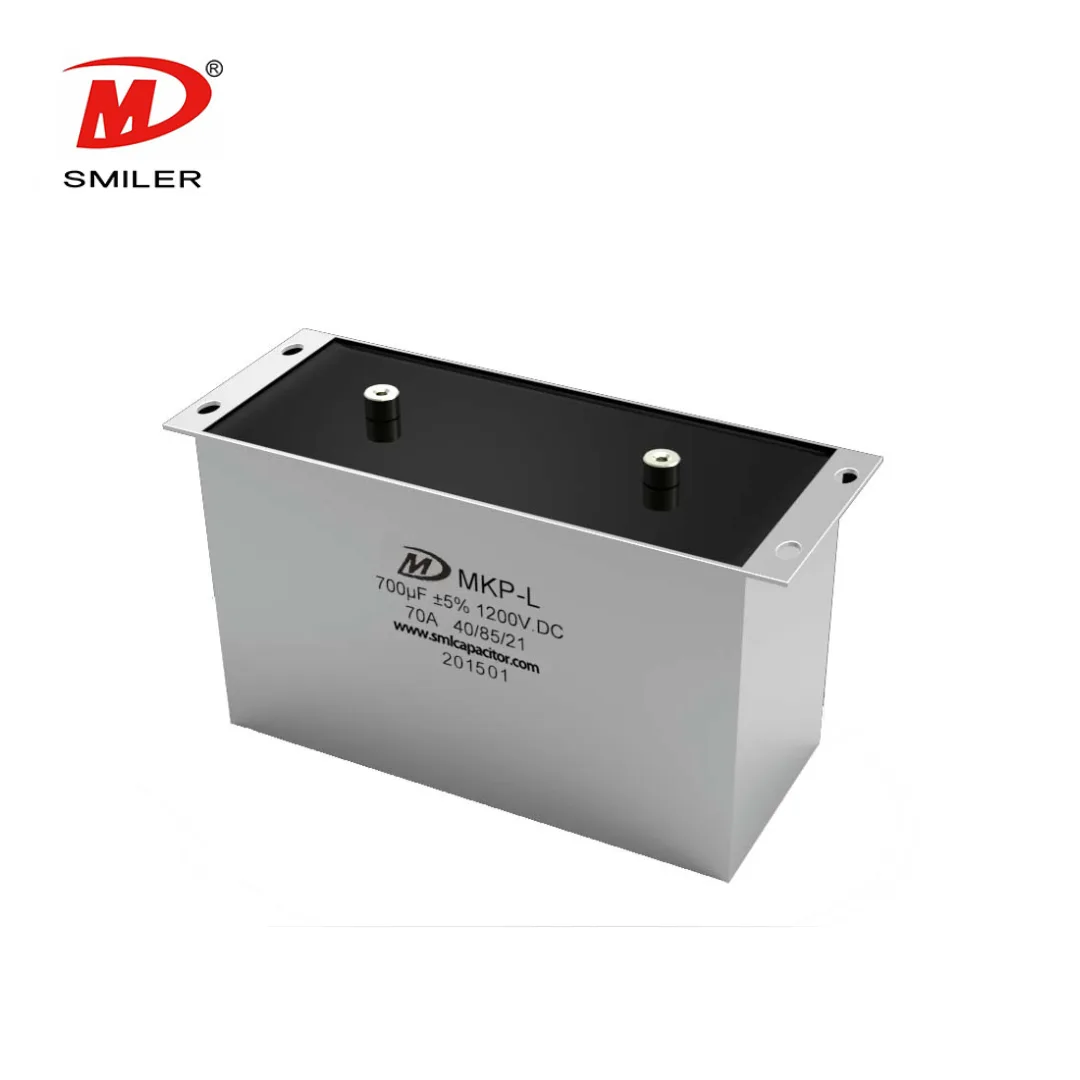
DC-link capacitor selection starts with the converter's operating conditions, before you choose a package or compare prices. A useful selection process turns those conditions into requirements, checks candidate parts against them and identifies what the prototype must demonstrate. This guide follows that engineering sequence for OEM teams reviewing film capacitors. Use the SMILER DC-link range to build a shortlist, then confirm the exact configuration against your design. The technical references below explain general selection considerations; they do not establish SMILER component ratings or equipment approval.
1. Define the job at the DC bus
Start with a marked schematic. Identify the capacitor location, the stages connected to that bus and the operating modes your design must support. Record what the capacitor must help the circuit achieve, such as an allowable bus-voltage variation during a defined operating event. Keep that requirement separate from an early component choice. Otherwise, an outline selected for convenience can become a design constraint before anyone has checked the electrical duty.
Write a short operating-case list rather than relying on one nominal condition. Include startup, steady operation, load changes and any other mode relevant to your equipment. For each case, record the values you know and the analysis still needed. These are proposed review steps, not a claim that every converter needs the same test sequence. Let the responsible designer decide which cases bound the actual application.
TDK's DC-link application overview treats electrical function, mechanical requirements and thermal conditions as connected selection considerations. Use that framing when browsing the DC-link capacitor family: a series can enter the shortlist without yet being approved for your converter.
2. Establish the voltage envelope before choosing a rating
Give each voltage value a clear meaning. Separate the normal DC level, the maximum sustained level, ripple and exceptional events. Record where the waveform is measured or calculated, together with the operating case. If the design team has not resolved a transient, keep it as an open item. Choosing a familiar voltage label does not close a missing design calculation.
Ask for the candidate's applicable limits and the conditions attached to them. TDK's film capacitor primer distinguishes AC and DC ratings and notes that allowable voltage can decrease with temperature. Do not invent a universal derating percentage or translate a DC label into an AC allowance. Apply the selected part's documentation and have the designer review the complete waveform.
The useful output here is a voltage requirement with a traceable basis. Give it a revision and connect it to the operating-case list. If a later control or supply change alters the bus conditions, the team can revisit the affected choice instead of starting the selection discussion from memory.
3. Choose capacitance against a circuit requirement
Define the acceptable circuit response first, then use an appropriate circuit model to determine the capacitance requirement. State whether the resulting value describes one capacitor or a complete bank. Identify the assumed component tolerance and operating conditions. A requirement that says only 'more capacitance' gives reviewers little basis for deciding when the design is sufficient.
Keep the model assumptions beside the result. For example, identify the operating event being evaluated, the allowed bus variation and any boundary conditions supplied by another design team. These are inputs to your own analysis, not suggested numerical limits. Ask a second engineer to check whether the model represents the intended operating case before treating the output as a purchasing specification.
Record both the nominal choice and the acceptance basis. If several values remain feasible, compare them against the same requirements rather than silently changing the design target to fit a convenient catalogue option. Resolve the minimum requirement through engineering review; leave commercial comparisons until candidates meet that baseline.

4. Review current duty and thermal conditions together
Prepare the relevant capacitor-current information for each demanding operating case. Keep RMS, peak and frequency information clearly labelled, and identify whether it comes from simulation or measurement. Ask which conditions apply to the candidate's current capability. A number without its conditions is a question to resolve, not a reason to approve or reject the part.
TDK's primer explains that ripple and high-frequency currents cause self-heating in film capacitors. The practical implication is to review the load alongside cooling and surrounding temperature. Avoid treating the enclosure-air temperature as a complete description of the component's thermal duty. Request the temperature definitions used in the proposed specification and use the same definitions in the validation record.
Our companion guide to DC-link capacitor ripple current covers the current and thermal review in more detail. Keep its findings attached to the selection record. If the planned cooling arrangement changes, flag the thermal assessment for review rather than carrying the old approval forward without examination.
5. Turn the electrical shortlist into an installable assembly
Review the candidate in the actual assembly drawing. Check the permitted envelope, mounting arrangement, terminal access and the proposed connections. Invite the assembly designer to mark fixed constraints and negotiable dimensions. A component photograph can orient the discussion, but approval should reference a drawing for the proposed configuration.
Look at the installation sequence as well as the final position. Ask whether the connection can be made and inspected, whether adjacent parts obstruct access and whether the documented mounting instructions can be followed. Put unresolved interface questions on the drawing. This is a practical review method; it does not assume a particular terminal style or mounting option is available from SMILER.
Keep the electrical and mechanical decisions linked. If the selected outline requires a revised connection arrangement, return that change to the circuit reviewer before freezing the assembly. Record which drawing revision was assessed so that prototype results and the eventual order refer to the same configuration.
6. Compare SMILER families without guessing variant performance
The MKP-L DC-link capacitor is listed in SMILER's product documentation with metallized polypropylene film and an aluminum or metal shell. The documentation also describes design to customer voltage and capacitance requirements. That makes it a relevant discussion point when your brief includes those requirements. It does not establish an unlimited customization range or approve a requested value without supplier review.
The MKP-LM DC-link capacitor is documented with metallized polypropylene film and a plastic shell. Its listed application areas include frequency converters, industrial power supplies, automobile DC-DC converters and solar inverters. Treat those descriptions as family-level orientation. They do not prove suitability for every converter in those categories or establish an automotive qualification.
Compare proposed configurations against your own requirement record. Request the applicable electrical information and outline for each candidate, then identify gaps or deviations explicitly. Don't rank the families by an assumed current capability, lifetime or certification. Those claims need evidence for the exact configuration under review.
7. Close the selection with a defined validation decision
Before ordering evaluation parts, write down what remains unproven. Assign an owner and an acceptance basis to each item. Distinguish a fit check from an electrical assessment and an equipment qualification. A prototype that assembles cleanly answers an interface question; it doesn't automatically answer every question in the selection record.
Capture the tested configuration, operating conditions, measurement locations and relevant drawing revisions. Have the responsible team compare the results with the agreed requirements, record deviations and decide which changes require another review. This produces a defensible release decision without presenting a successful demonstration as a universal performance claim.
Once engineering has defined the candidate and remaining questions, use the capacitor RFQ checklist to prepare the supplier brief. That separate guide handles quotation scope, quantities and supporting documents. Send SMILER the selection record with the decision you need next: configuration review, an outline proposal or a quotation against a defined requirement.
Frequently asked questions
Can converter power alone determine a DC-link capacitor?
Use the power rating as context, then define the conditions at the capacitor. The selection record should identify bus voltage, required capacitance, current duty, temperature conditions and installation constraints. Ask the circuit designer to establish those requirements for the actual topology and operating cases.
Should MKP-L or MKP-LM be selected first?
Start with the requirements and use the documented construction to form a shortlist. MKP-L has a documented metal-shell construction, while MKP-LM has a plastic shell. Neither description establishes which exact variant meets your electrical and mechanical duty; request a configuration-specific comparison.
What should be ready before a sample evaluation?
Identify the proposed part and drawing revision, the questions being evaluated, the operating conditions and the acceptance basis. Keep unresolved requirements visible. The evaluation should lead to a clear decision about that configuration, with any remaining qualification work assigned.
Sources & technical reading
External technical references explain general principles, not SMILER ratings or approvals.